


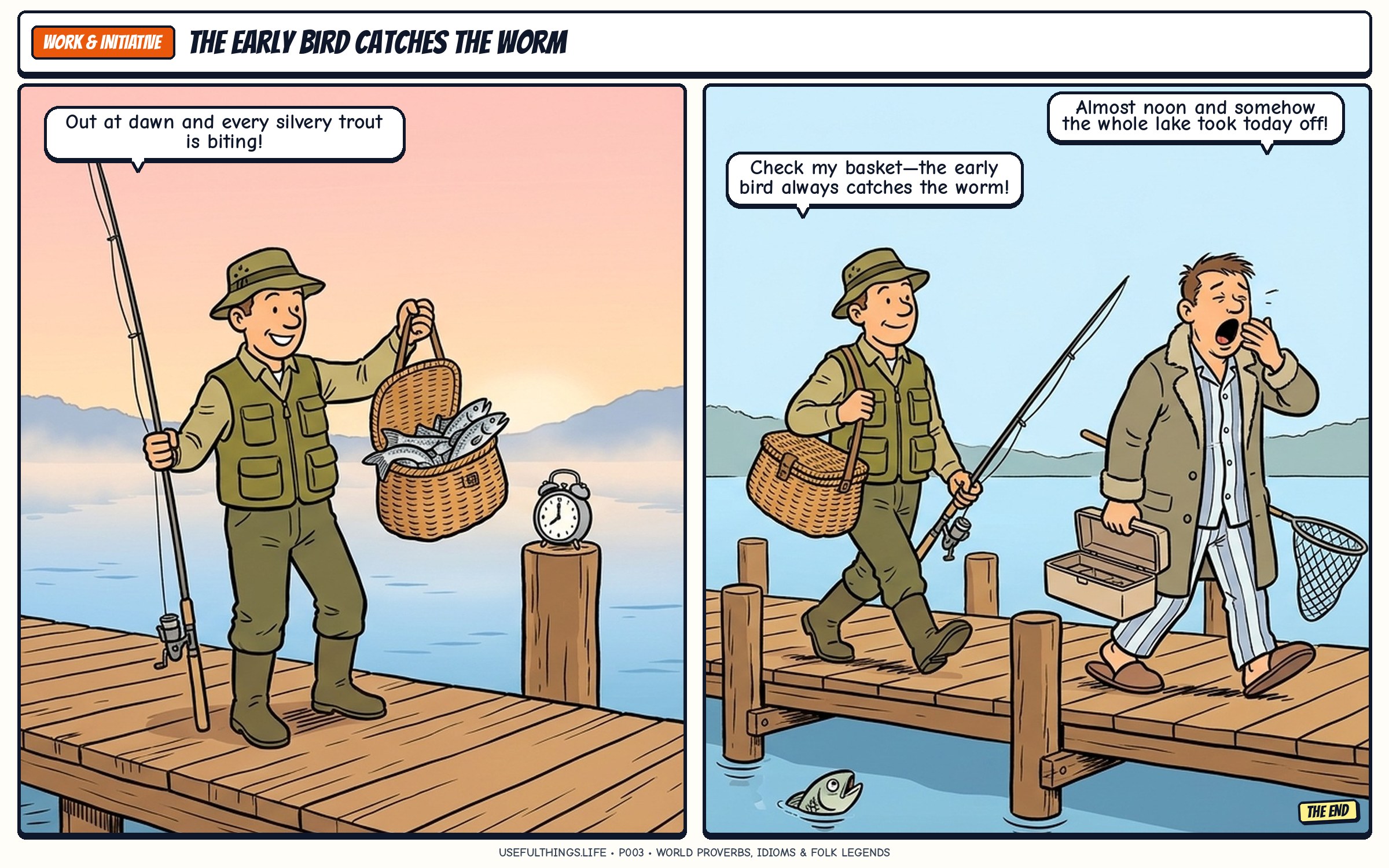
📜 The Proverb
«The early bird catches the worm.»Proverbio italiano marinaro e d'acqua dolce affiancato dal celebre parallelo inglese sull'uccellino del mattino.
Key meaning: Prompt initiative and early preparation capture opportunities missed by sleepy hesitation.
— Strange! I arrived before noon and the entire lake looks totally deserted today!
— Not deserted at all—they ate breakfast at six! The early bird always catches the worm!
🌍 Origin, Meaning & World Equivalents
Why Italian picks fish while English watches birds
«Chi dorme non piglia pesci»—literally, he who sleeps catches no fish—captures an everyday observation shared along harbors, riversides, and early market stalls alike. Around sunrise, cool calm water brings hungry fish near the surface; by bright noisy midday, they retreat deep into shade, leaving late arrivals holding empty nets and plenty of excuses.
Rather than scolding sternly, the Italian saying delivers its lesson with cheerful good humor: you do not need to work twice as hard all afternoon if you simply arrive on the dock when opportunity is awake.
Meeting its famous English twin
English pairs seamlessly with «The early bird catches the worm», a proverb recorded in English collections since the seventeenth century (William Camden and John Ray). Where Mediterranean communities pictured boats leaving port at first light with fresh nets ready, English gardens watched thrushes hunting dew-moist worms at daybreak. Spanish adds «A quien madruga Dios le ayuda» (God helps those who rise early) and French praises «L'avenir appartient à ceux qui se lèvent tôt»—all agreeing across borders that punctual preparation beats hurried afternoon catching up every single time.




Leave a Reply