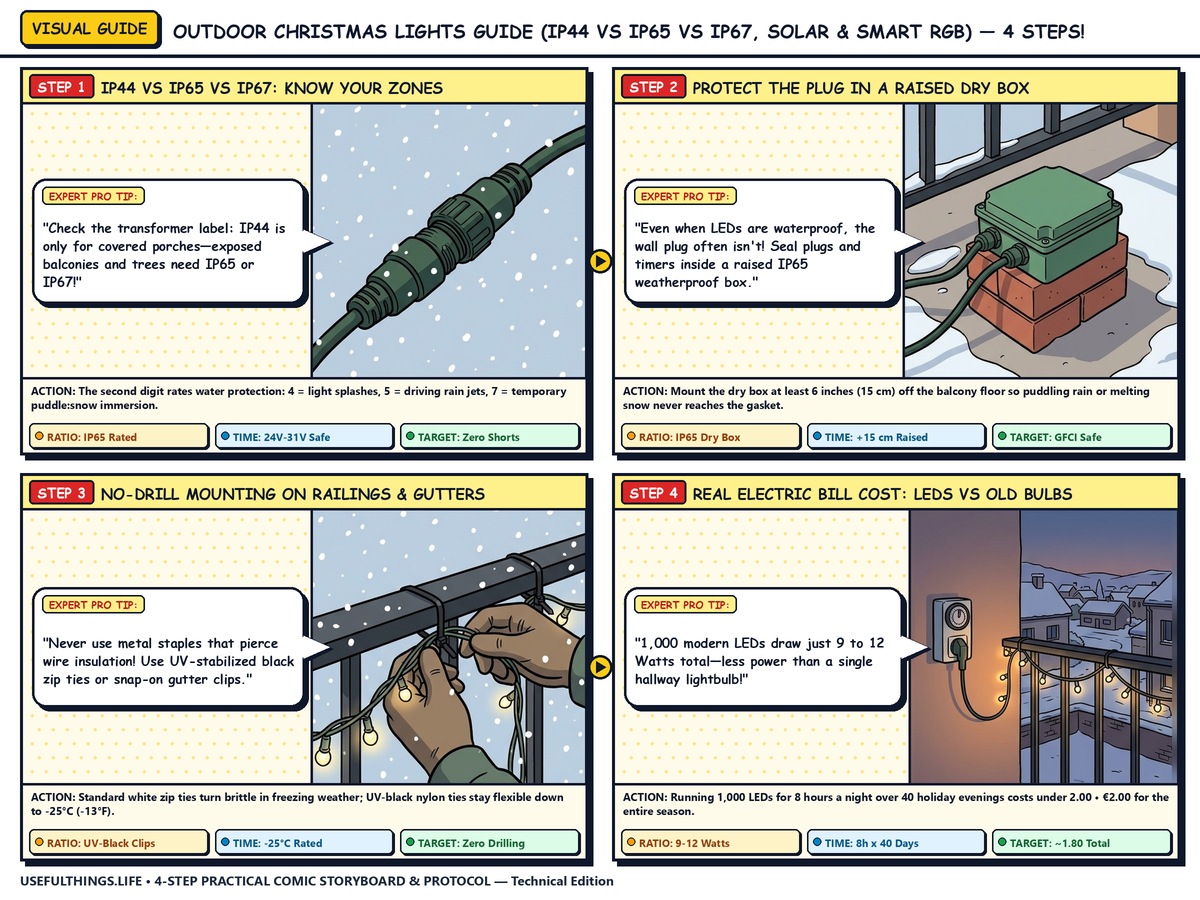
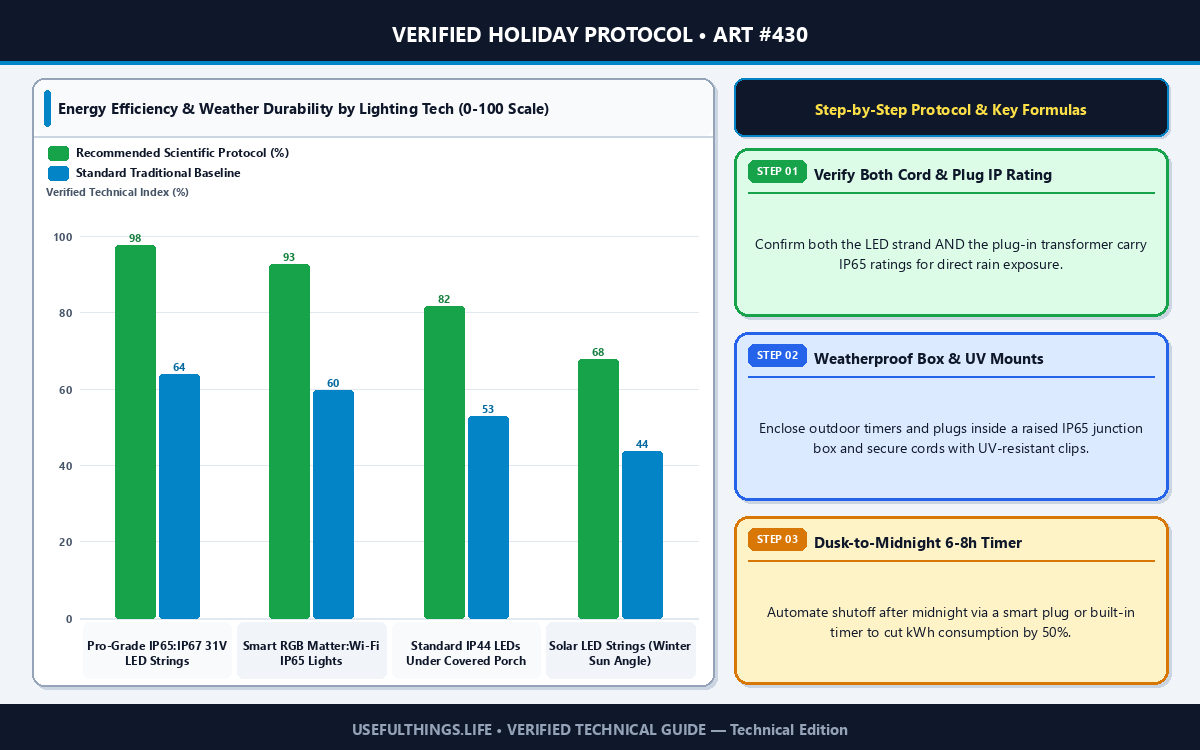
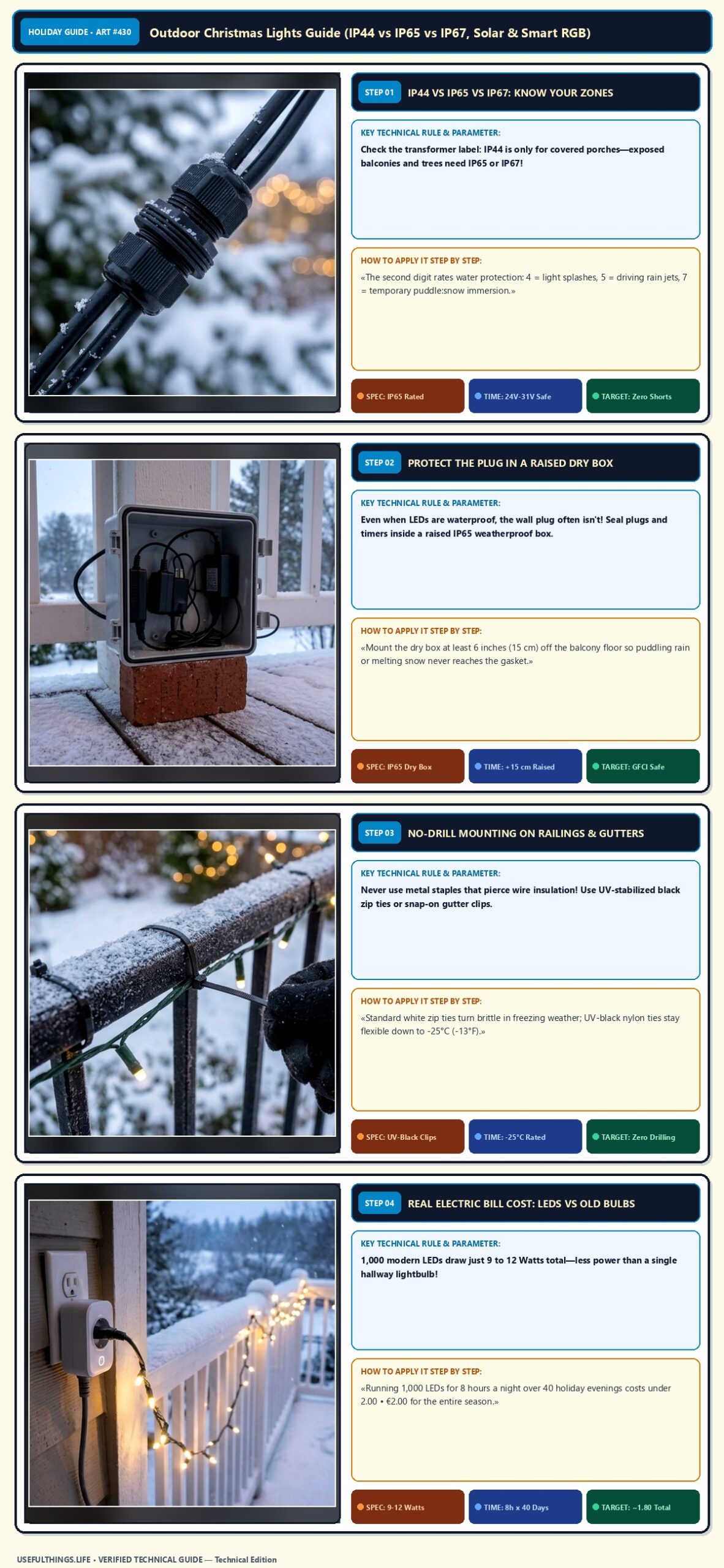
Lighting a balcony, roofline, or garden tree safely through December weather requires matching the IP (Ingress Protection) rating to actual rain and snow exposure. While an IP44 rating is only splash-resistant for covered porches, exposed railings, hedges, and gutters require IP65 or IP67 weatherproofing with O-ring screw connectors and a low-voltage SELV transformer (24V or 31V DC). Better yet, thanks to high-efficiency LEDs, running 1,000 outdoor lights for 8 hours a night across 40 holiday evenings costs less than $2.50 / €2.50 on your electric bill.
Explore the 4 practical scenarios, translate technical units into everyday comparisons, or calculate exact figures for your setup.
📏 Practical Everyday Comparison
Whereas 1,000 vintage incandescent mini-bulbs drew roughly 400 Watts (costing ~$35–$45 over 40 nights and running hot), 1,000 modern low-voltage LEDs draw only ~10 Watts total—consuming just 3.2 kWh (~$0.65–$1.10 for the entire 40-day holiday season) at 8 hours per night!
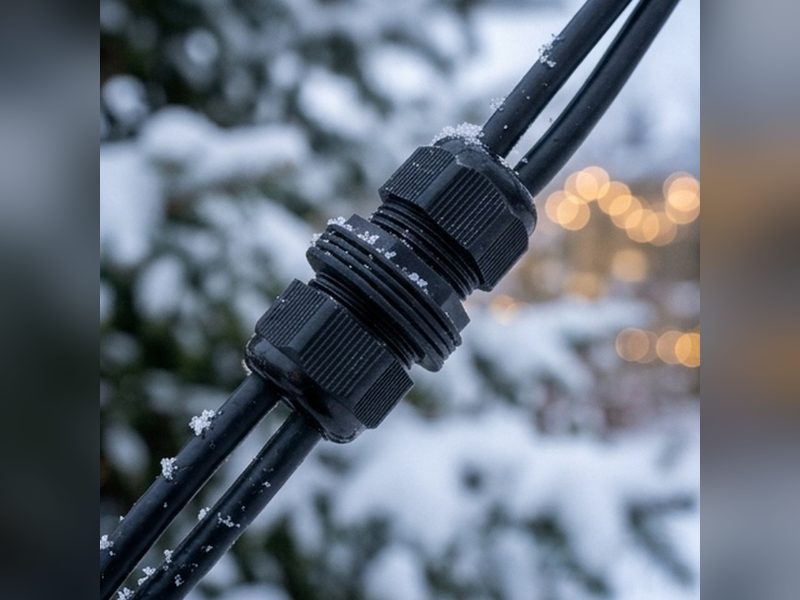
Line-voltage (120V/230V) strings pose a shock hazard if a cord is pinched in a door or chewed by a pet or squirrel. Modern 24V or 31V SELV low-voltage LED systems step power down at the plug to a touch-safe level and link extendable segments via gasketed screw collars.
WINTER SOLAR PHYSICS
2. Making Solar Christmas Lights Work in December: The 60-Degree South Tilt Rule
In December, the midday sun sits low on the southern horizon (20–28°). To charge solar holiday strings reliably on short winter days, never mount the solar panel flat: angle it at 55–60 degrees facing true South in unshaded light and pick models with a 18650 lithium battery (1,800+ mAh).
❌ MYTH / MISTAKE
3. Common Mistake: 'Slamming a Window or Balcony Door Shut Over a Round Power Cord'
❌ FIRE & SHOCK HAZARDSEAL DAMAGEUSE FLAT PASS-THROUGH
Crushing a round power cord inside a tight PVC or aluminum window frame severs internal copper strands over time and ruins weatherstripping. If you lack an outdoor GFCI/RCD outlet, use a purpose-built flat window pass-through ribbon cable or a high-capacity outdoor USB-C/solar battery pack.
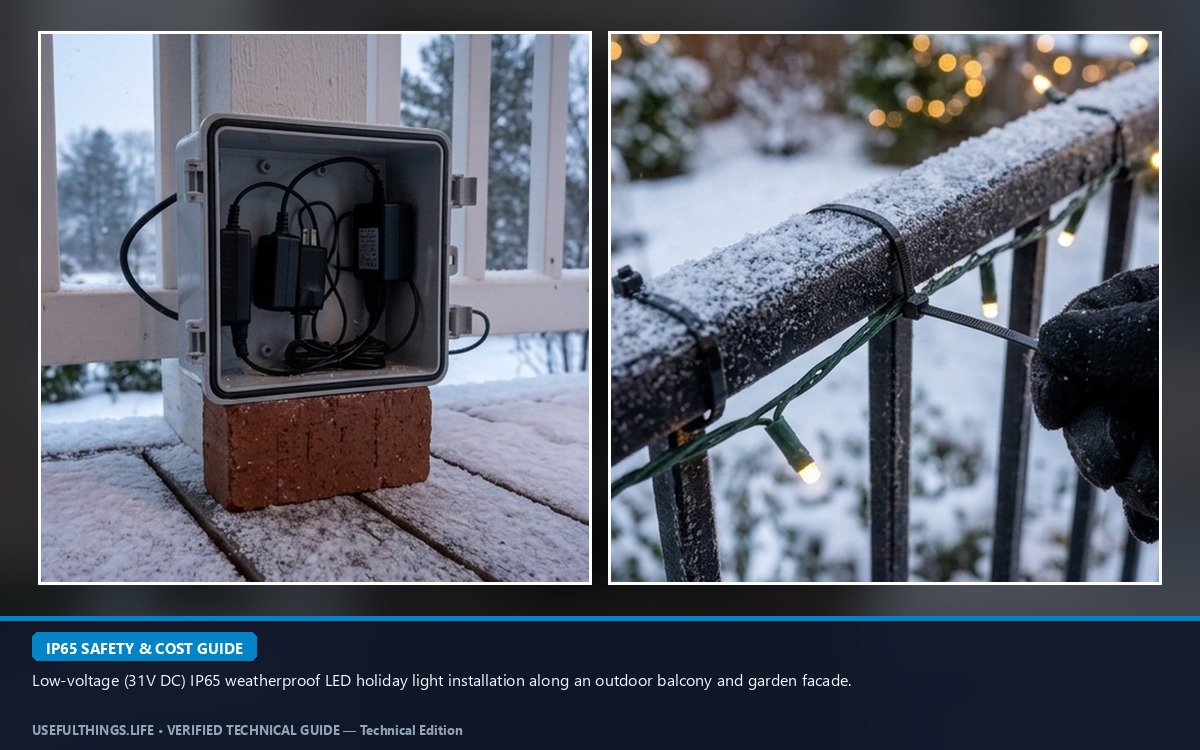
Low-voltage (31V DC) IP65 weatherproof LED holiday light installation along an outdoor balcony and garden facade.
✅ Best Practices (Do’s) vs ❌ Common Pitfalls (Don’ts)
✅ Verified Golden Rules
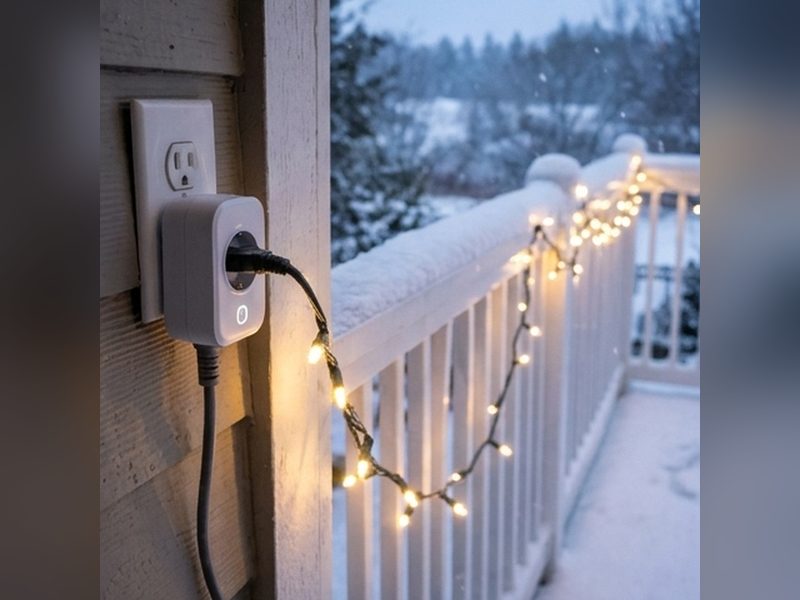
Pairing your display with an outdoor-rated IP65 Matter/Wi-Fi smart plug automates sunset-to-midnight schedules effortlessly.
Heavy-duty rubberized cables (H05RN-F / SJTW) stay supple at -20°C (-4°F) without cracking.
Using outdoor-rated removable 3M Command light clips or gutter hooks leaves zero holes or sticky residue in January.
❌ Myths & Mistakes to Avoid
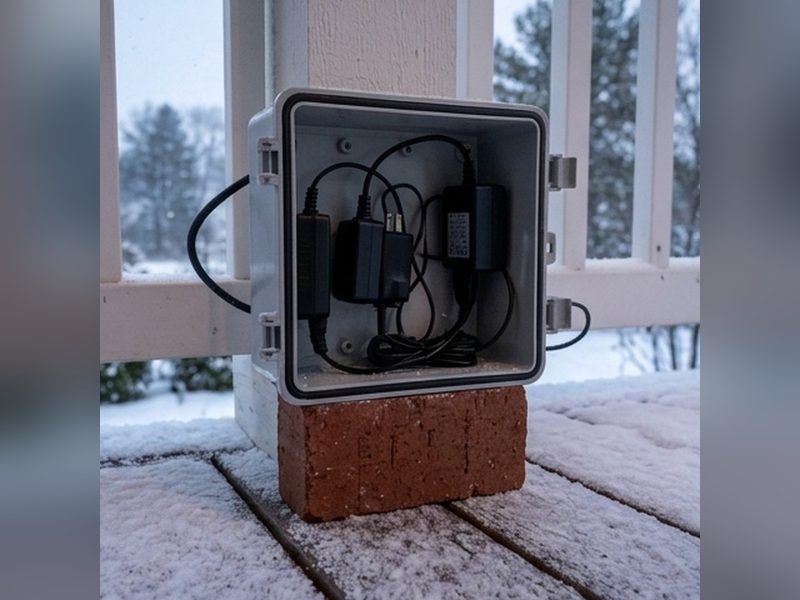
Mistake to avoid: Wrapping plugs in plastic grocery bags or duct tape—this traps condensation inside the socket; always use a gasketed IP65 dry box.
Mistake to avoid: Leaving the female end-cap of an extendable light string uncapped in rain or snow.
💬 Frequently Asked Questions (FAQ)
❓ Are IP44 Christmas lights safe for an uncovered balcony or garden?
No—IP44 is only splash-proof and meant for covered porches or eaves. For uncovered balcony railings, bushes, and trees exposed to windblown rain or snow, always choose IP65 or IP67.
❓ How much electricity do 1,000 LED Christmas lights use in a month?
1,000 modern LEDs draw only about 10 to 12 Watts total. Running them 8 hours a day for 30 to 40 days uses just 2.4 to 3.8 kWh, costing roughly $0.50 to $1.10 for the entire season.
❓ What is the best way to hang outdoor lights without nails or drilling?
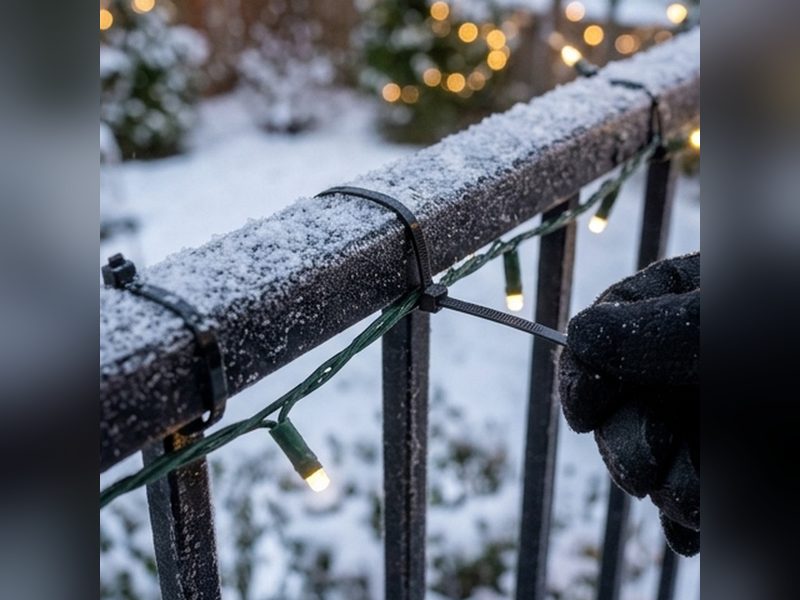
Use UV-resistant black nylon zip ties on railings, snap-on plastic gutter clips along rooflines, and outdoor-rated removable adhesive clips on smooth window frames.
🔗 Related Guides & Calculators on UsefulThings.life



Leave a Reply