

💬 The Idiom
«Break a leg — and the Italian 'In bocca al lupo'!»Formula italiana di buon augurio con doppia risposta tradizionale: «Crepi!» o «Viva il lupo!».
Key meaning: Warm Italian good-luck wish before a tough test or performance, akin to theater's 'Break a leg'.
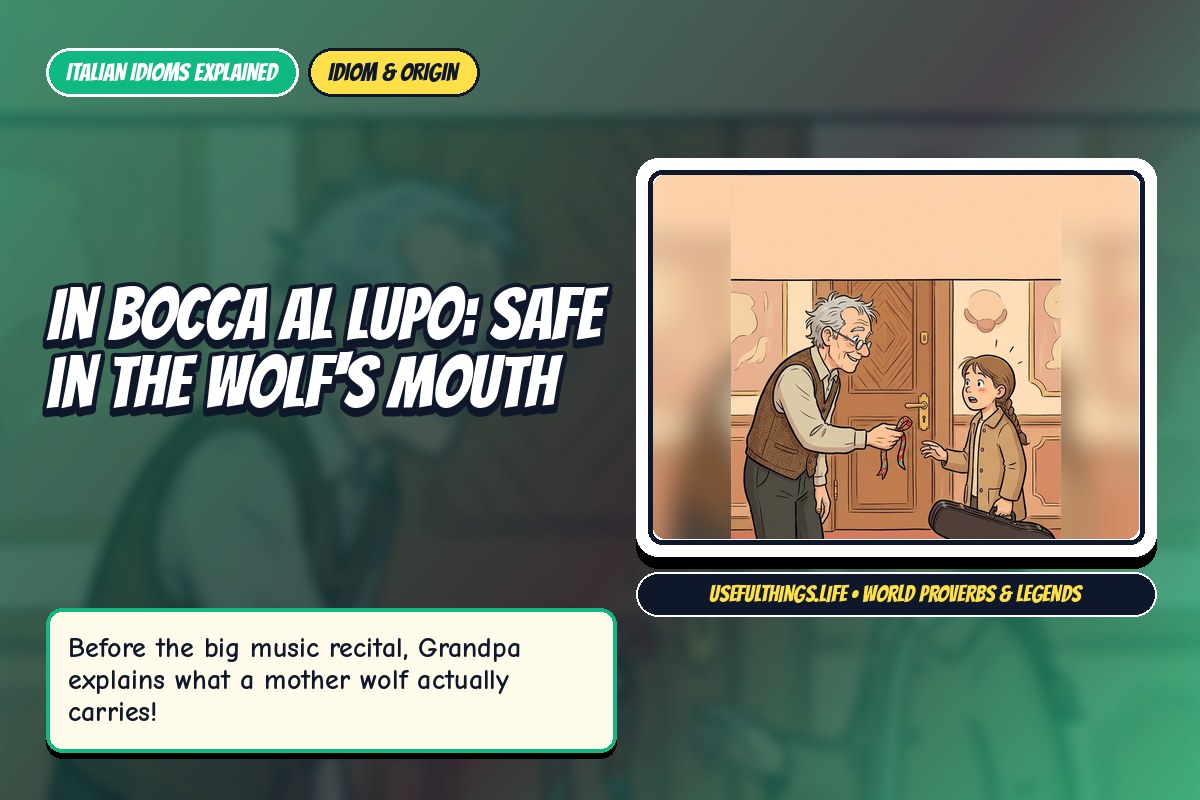
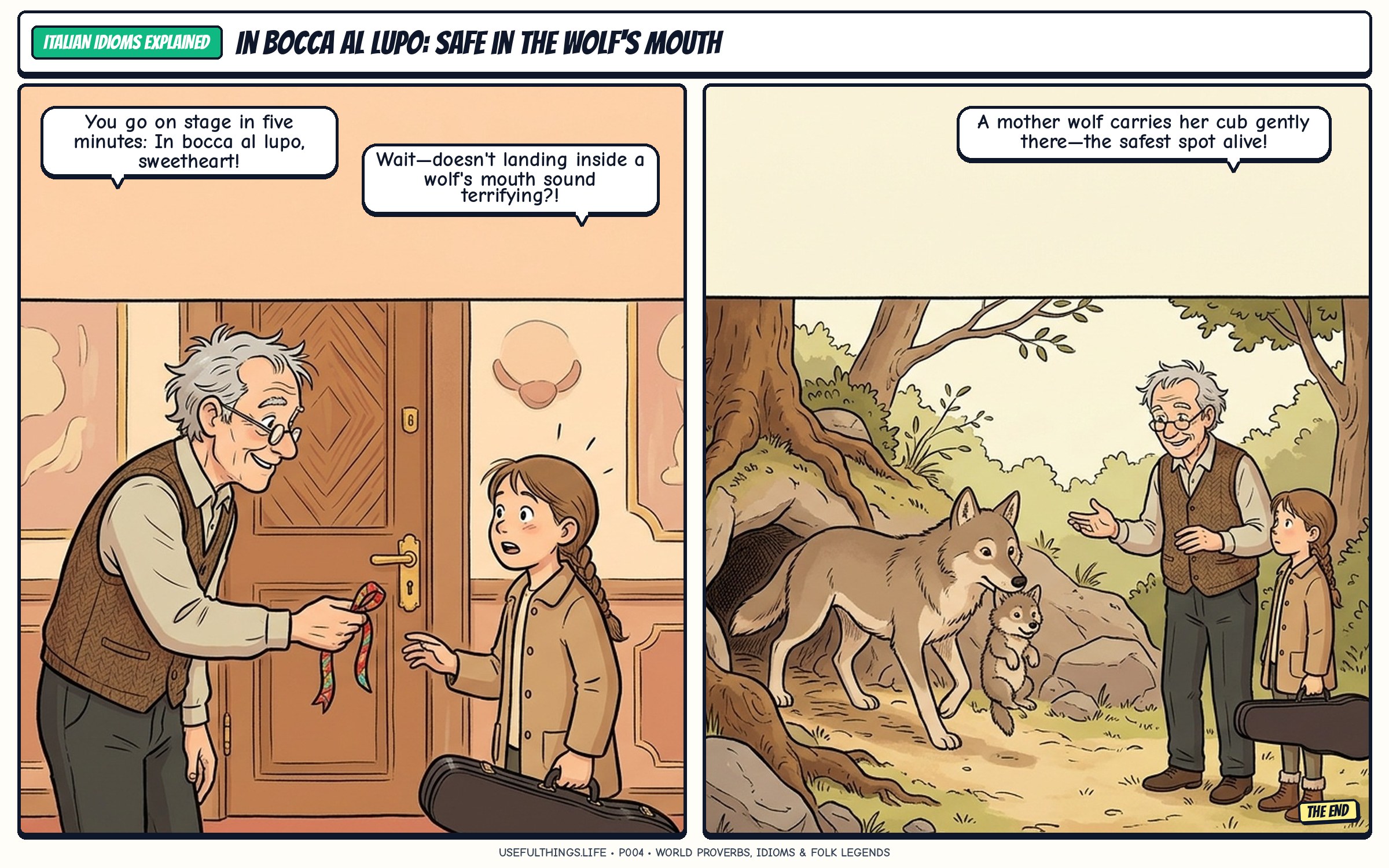
— Ready for your big recital? Remember our favorite Italian wish: In bocca al lupo!
— Grandpa, literally into the wolf's mouth?! Isn't that scary?
— Not when you picture a mother wolf carrying her tiny pup gently home by the scruff—one of the safest spots in the forest!
🌍 Origin, Meaning & World Equivalents
Why Italians wish friends 'Into the Wolf's Mouth'
Few Italian phrases puzzle visitors more delightfully than «In bocca al lupo!»—literally, 'into the wolf's mouth'—spoken warmly before school exams, music auditions, theater premieres, concerts, or job interviews. Linguistic scholars at Italy's Accademia della Crusca record two vivid cultural explanations that have grown side by side over the centuries.
Protective superstition versus maternal care
Older tradition traces the phrase to rustic hunting lore and good-luck reversal: openly wishing someone triumphant success might tempt bad fortune, so friends humorously named the worst peril imaginable instead—closely mirroring how English theater crews call out «Break a leg!» backstage before curtains rise. Historically, speakers replied «Crepi!» (may it perish) to deflect the omen.
Across modern everyday Italy, however, a gentler natural image has become equally beloved: a mother wolf carefully carrying her tiny cub by the scruff inside her jaws toward safety without leaving a single scratch. Rather than sensing danger, families picture pure maternal care keeping fragile little paws out of harm's way along winding forest paths. Embracing that warm protective picture, many Italians today smile fondly and reply «Viva il lupo!»—long live the wolf!



Leave a Reply